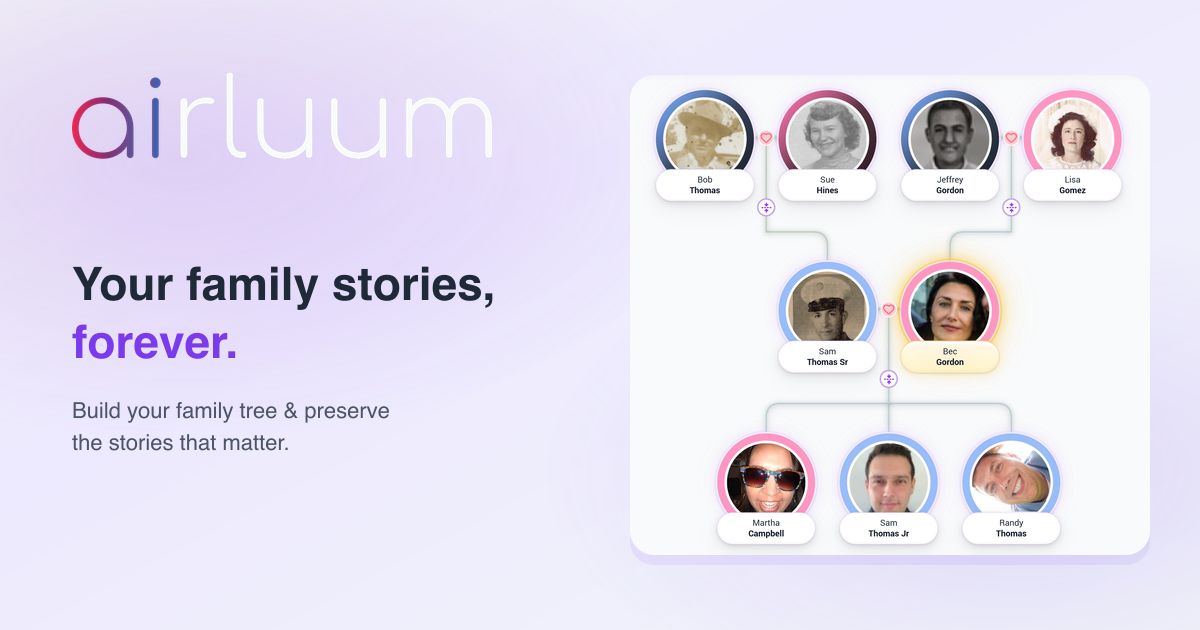
What Airluum is
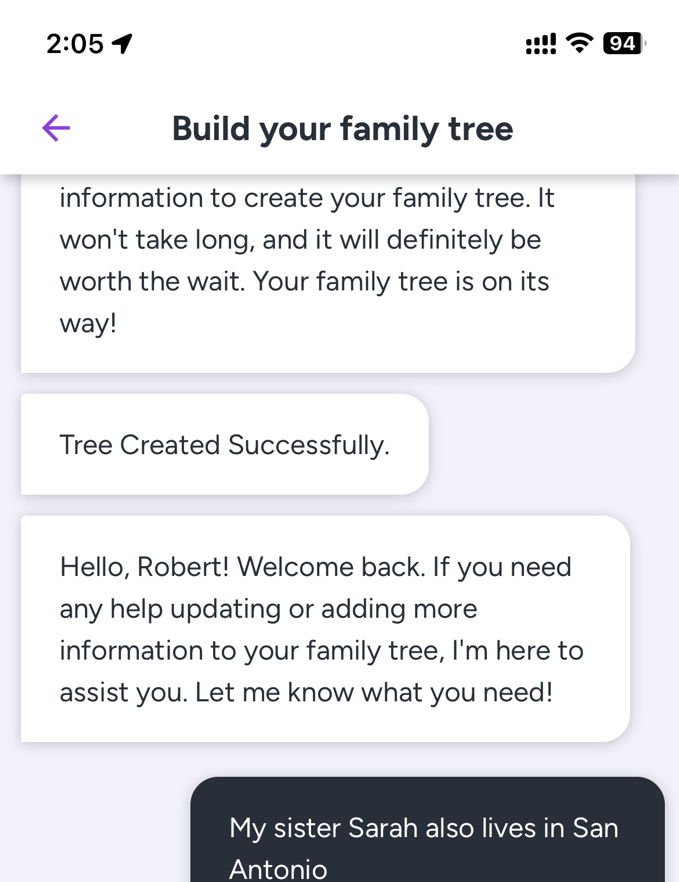
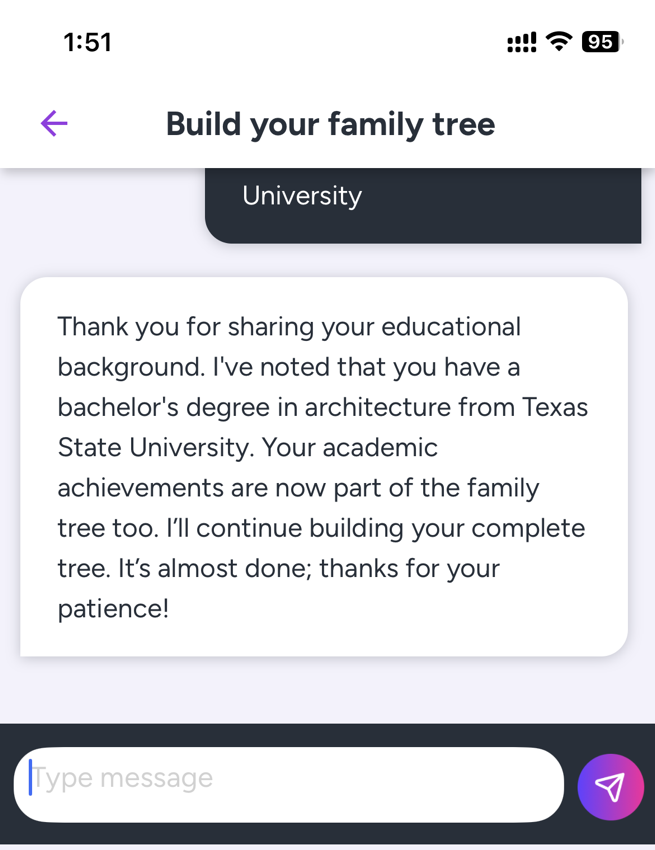
Most family tree software asks you to fill in forms: a name, a date, a relationship, one box at a time. Airluum starts with a conversation instead. You tell its AI assistant about your family in plain language, that your sister lives in San Antonio or that you have two children, and the assistant builds and extends the tree as you talk.
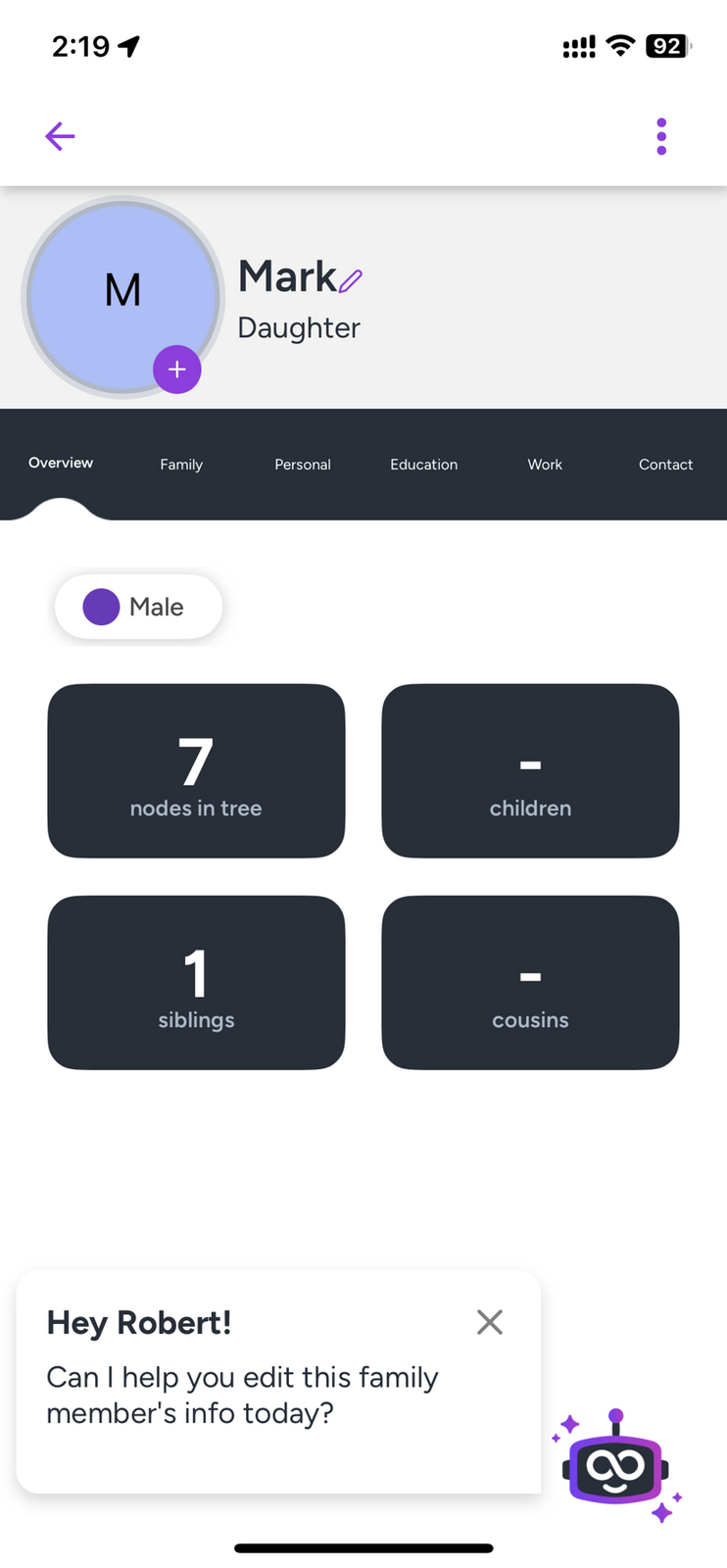
Every person in the tree gets a profile, and the app writes a short biography for each from their relationships, so the tree carries stories rather than only names. Trees can be shared straight from the phone, and an assistant stays on hand on every profile to help edit a family member's details.
What we built and fixed
- The AI tree builder working end to end, including manual tree building and a working family tree where the previous team's attempt had failed.
- An AI-generated biography of one to two sentences for each member, derived from their relationships.
- Every remaining screen to the design wireframes, plus the profile view.
- Sharing a tree through the phone's native share sheet.
- Usage limits in place of a paywall, so the product could launch and be measured before pricing was argued.
- Analytics and a working development build in the principals' hands for demos.
- Production deployment to both stores.
The situation we walked into
Airluum's previous development team had stopped with blocking issues open. Sign-in failed for some users, connections dropped mid-session, and the screens that mattered most were missing. The company wanted the app in both stores before Christmas, and a rewrite did not fit that window.
Robles Industries came in under the Div42 name in September 2024 as fractional technology leadership with the delivery team attached. Before signing, we reviewed the codebase and infrastructure and put our assessment in the agreement itself: this is not how we would have built it, and we will run with it anyway to hit the date.
What we fixed first
- An OAuth defect breaking both Google and Apple sign-in.
- An authentication refresh-token bug that dropped sessions.
- A shared staging and production setup with unstable socket connections, replaced by a dedicated production WebSocket server.
- Keys and Firebase projects consolidated and separated by environment before the production release.
- iOS
- Android
- Firebase
- WebSocket server
- Apple sign-in
- Google sign-in
- OAuth
- AI assistant
- Analytics
- TestFlight
How we ran it
The delivery team was contracted, managed and paid by us, so Airluum held one relationship, not five. Every build carried documented functional and regression test passes, which on an inherited codebase is the only way to tell a defect you introduced from one that was already there. Production builds reached TestFlight and Android internal testing at 6.1.0 and went through intensive QA ahead of store release. Both apps were then released, on the App Store and on Google Play. Neither is listed today.
What we can start on
A consumer app with an AI assistant at the center. A stalled build with a date on it. Or a straight assessment of an inherited codebase, with a plan for shipping from it and a plan for replacing it, costed side by side.