The problem
Wanderlust Campus trains and supports independent travel agents, and runs a second brand for the agents who sell through it. In early 2023 the company had no technical leadership. Staff email sat in a Microsoft 365 tenant on a domain the company was leaving, project ideas were held verbally, and vendor and integration decisions kept stalling for want of someone to make them.
Frank Robles signed a services agreement with the chief executive on 1 March 2023 and started as fractional CTO the same day.
By spring 2024 two ideas had firmed up enough to specify, and a third problem was smaller and more annoying: paying independent contractors ran through six separate web forms, one per contractor type, with different rates on each.
What we did about it
- Email, and the tools around it. Thirty-one mailboxes moved or re-provisioned. Twenty-four staff came off the old tenant onto Microsoft 365 on the new company domain, which meant a public address change for every one of them. Seven on the second brand stayed on hosted webmail. The tracker carried each person by department, old address, provisioning source, new address, license state and backup address.
- The decisions that had been waiting. Slack for IT, executives and project teams, Notion for the business, and a part-time IT hire to run the day-to-day, all settled at a technology summit in 2023.
- The Wanderlust Editor, a browser design tool for agents, specified and built.
- The agent platform integration with Travefy, modeled, authenticated and specified end to end.
- Contractor invoicing. One form in place of six.
The Wanderlust Editor
The brief was a way for an independent agent to take a marketing template and make it theirs: their logo, their colors, their text, their photographs, and a print-ready PDF at the other end. The obvious route was to wrap a design vendor's API. We built a browser canvas editor instead, so the document model belonged to Wanderlust and the export did not wait in someone else's queue.
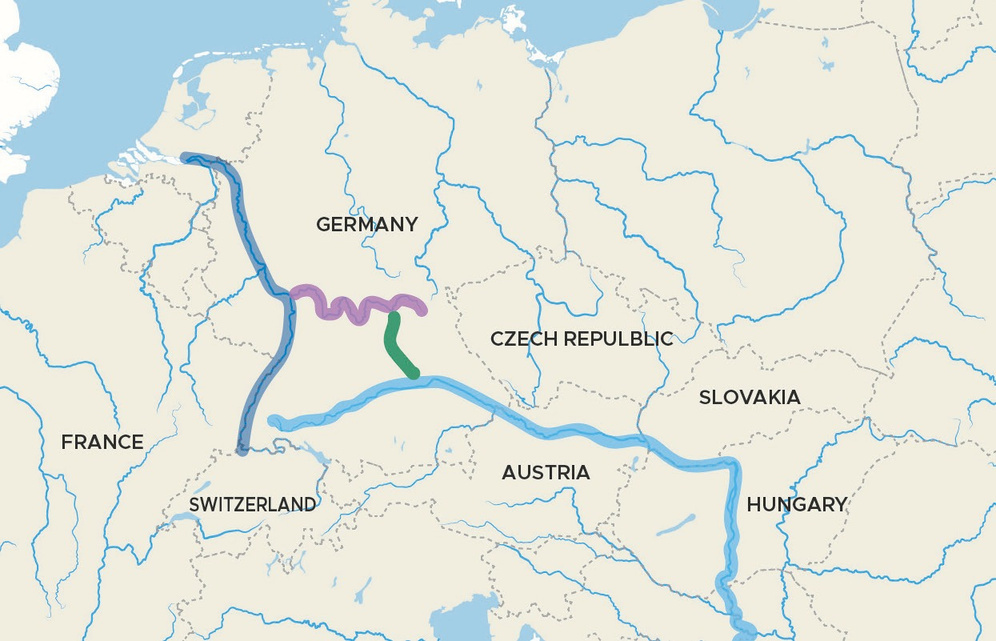
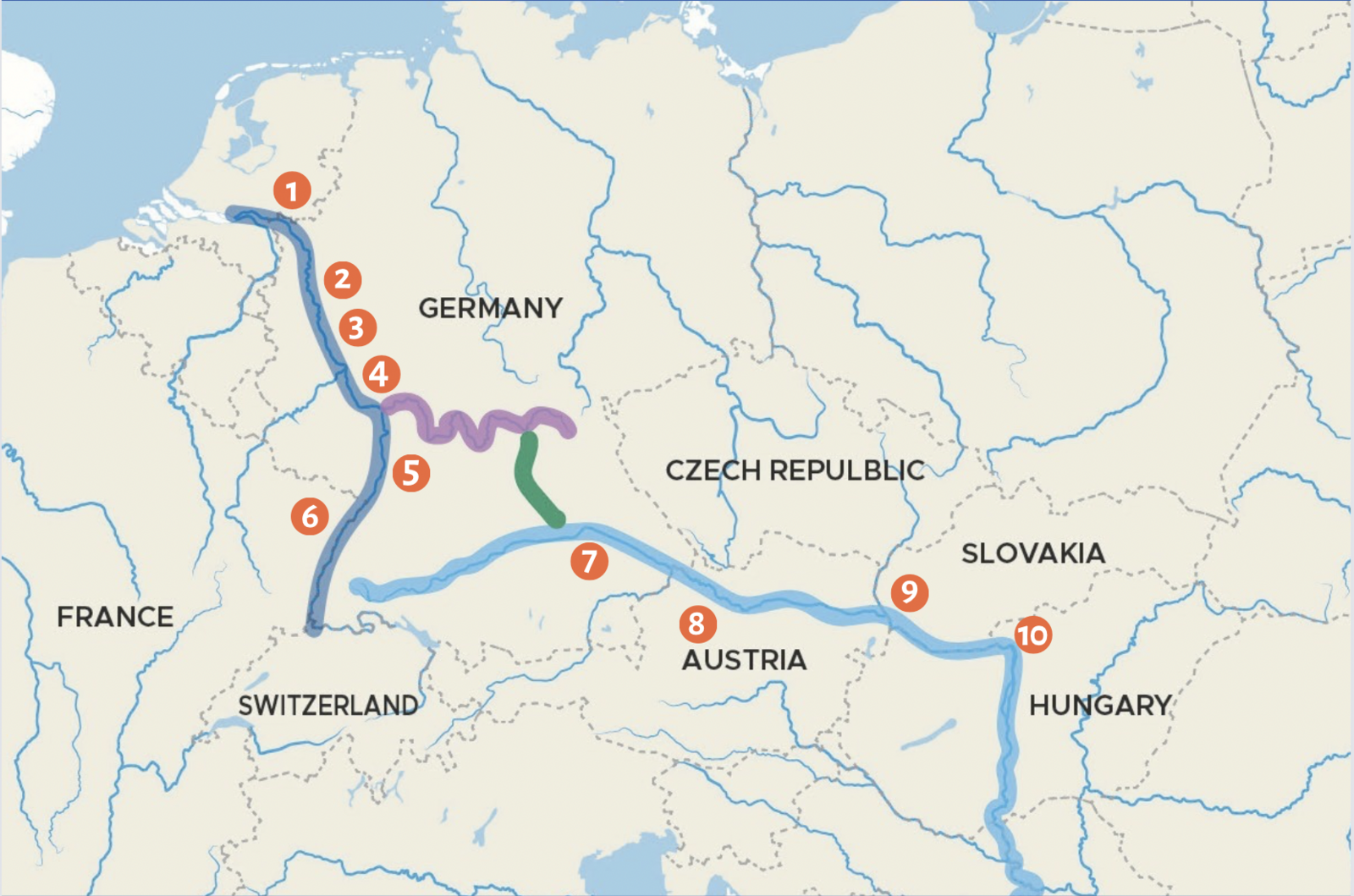
The saved project file from August 2024 shows what it could do: canvases at arbitrary sizes, rectangles, lines and dotted lines, plain and rich text, placed images, layer ordering, snapping, a template library keyed by template id with the preview embedded, multi-page documents, and PDF export. The sample document is a European river cruise guide with a logo placeholder where an agent drops their own mark.
The integration nobody could specify
The second build answered a question the company had been circling for a year. An agent who joins the selling brand needs working itineraries and proposals in Travefy, the tool agents already build trips in, without typing the same client details twice. Nobody had written down what that actually required.
We modeled the Travefy APIs as Postman collections, set up a repository for a Wanderlust and Travefy SDK, and got authentication working against the live service before writing the specification, so the specification described what the API does rather than what the documentation says it does.
How it is built
The editor ran as a browser application on AWS with a JSON document model, Quill for rich text, template images held inside the document, and the PDF produced in the browser. The design vendor route was specified to sit on the WordPress platform with OAuth 2.0, cached template metadata, webhooks for template changes and the vendor's export API. The Travefy side is REST, OAuth 2.0 with scoped authorization, and webhooks in both directions.
All of it sat on infrastructure we stood up first: source control, AWS servers and database, storage, work tracking with written stories, and CI/CD. Email is Microsoft 365 and Exchange Online.
- AWS
- JavaScript
- Quill
- JSON document model
- Browser PDF export
- OAuth 2.0
- Webhooks
- Microsoft 365
- CI/CD
How we ran it
A monthly retainer for fractional CTO and technology support from March 2023, with weekly meetings at a minimum and the work product owned by the client. A service order in May 2024 added the two builds against fixed milestones with staged distributions.
Frank held the CTO seat throughout: requirements, vendor evaluation, the specifications themselves, financial modeling and presentations. A development team, enlarged for a period to beat the schedule, did the builds, and the client's own part-time IT hire ran migration tasks alongside them.
What was delivered
- The email migration completed and the domain change held.
- The editor reached two of four milestones, accepted, with a working tool that produced and exported a real document. Two demo videos from August 2024 record it running.
- The Travefy specification was written in full on top of working authentication: automatic document creation in an agent's account on registration, real-time synchronization back from the selling brand, webhooks in both directions, OAuth 2.0 with scoped authorization, and document access gated on subscription status.
- Contractor invoicing shipped. Wanderlust sets a description and a value for each line item and the contractor never sees the value. The contractor enters a quantity, and two calculated field types do the rest: a total per line and a sum of the totals. Forms save and resend to the same person each month. The pattern is a Div42 product today.
- Both builds were paused at the client's request in mid-2024. Adoption, usage and time-saved figures were never measured, so we quote none.
What we can start on
A design or document tool your customers use in a browser, where the output has to be print-ready. Integration between two platforms that serve the same user and do not talk. Or a fractional CTO seat for a company making vendor decisions it cannot yet evaluate.